

Like it or not, E10 unleaded petrol is here to stay. It’s been available at the pumps since September 2021 and is now promoted as the ‘new’ standard unleaded.
E5, the ‘old’ unleaded, is still available at many petrol stations, but you’ll have to put your hand in your pocket as E5 is only available as the premium option, the super unleaded.
Different petrol companies call it by different names. Shell has their V-Power, BP calls it Ultimate, but they’re all commonly referred to as Super Unleaded.
We get asked by our customers daily, can I use E10 unleaded petrol in my car? The answer is, maybe!
You see, there’s not just a simple answer. There are many things to take into consideration.
But, the overriding factor for all vehicles that we cannot change is that ethanol, by its very nature, is hygroscopic. Which means it attracts water. In fact, it’s just like a big sponge sitting there in your petrol tank.
So, even if your vehicle can run on E10 unleaded, it could have problems down the line when sufficient water has accumulated in the petrol tank to affect the way your engine runs.
So, let’s take a look at E10 unleaded and breakdown, what it is, what can happen, and how it could affect your vehicle.
What is E10 unleaded petrol?
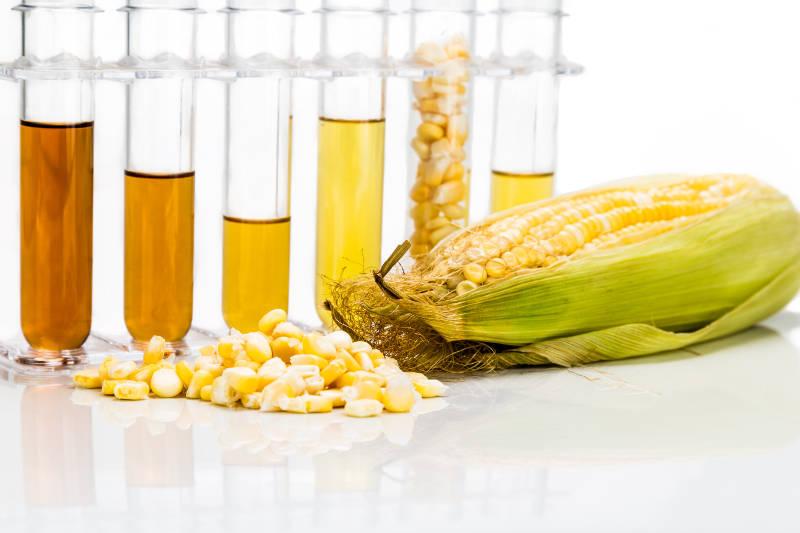
The ‘E’ refers to ethanol, which is made from, or is a by-product of, materials such as low-grade grains, sugars and waste wood. They commonly used corn as it’s easy to grow, and harvests well in even arid conditions. E10 unleaded petrol is a mixture of this renewable ethanol, up to 10% by volume, and ordinary petrol. So, it contains up to twice as much ethanol as E5 super unleaded does, which is why it causes problems with many cars.
Can my car use E10?
Maybe! Possibly! Not Really! It’s really hard to give a definitive answer to this question, even the government's own website is not conclusive.
The main heading on the webpage says “Check if your vehicle can run on E10 petrol”. Well, your vehicle may be able to ‘run’ on E10 unleaded, but that doesn’t mean the ethanol in the fuel will magically disappear and not cause other problems further down the line.
Ethanol is acidic by nature, albeit weak, so as soon as you use it, it attacks the components in your vehicle's fuel system. Slowly eroding them over time, rubber pipes, gaskets, seals, metals and plastics could all be affected by the ethanol in your fuel.
This is particularly so for older vehicles. But, even on a more modern vehicle debris from these eroded parts can end up causing blockages in your vehicle’s fuel injectors. Which will cause running issues and misfires.
Why is E10 being used?
E10 unleaded petrol was introduced as part of the government's plans to reduce the amount of carbon dioxide being produced on the UK’s roads. CO2 is a greenhouse gas that contributes to climate change and global warming. Blending ordinary unleaded fuel with ethanol reduces the volume of fossil fuels needed, thus reducing the amount of CO2 produced in your vehicle's exhaust emissions.
In fact, they expect the use of E10 unleaded to cut transport related CO2 emissions by 750,000 tonnes a year, which is the equivalent of taking 350,000 cars off the road.
However, there’s a catch. Our customers often report that their petrol vehicles that run on E10 unleaded petrol are not as fuel efficient as they once were while running on good old-fashioned E5. This is because ethanol based unleaded fuel has a lower energy density, which results in lower MPG. Which means you have to use more fuel, which creates more CO2, to reach your destination.
So, we’ll have to wait and see if they realistically achieved those expected government figures.
Will E10 damage my car?
Giving a definitive answer is impossible. At Liphook Auto Services in Lindford, we don’t have a crystal ball. What we can tell you though, is that most vehicles manufactured after 2011 ‘should be okay’. After this date, automobile manufacturers started using raw materials in the production of their motor vehicles that were resistant to most of the adverse effects of ethanol.
Except one, the hygroscopic nature of ethanol. The ethanol in the fuel does not know it’s in a modern vehicle and magically lose its hygroscopic qualities. Although, that being said, modern fuel systems with plastic fuel tanks and sealed fuel filler caps are less susceptible to condensation forming on the inside of the fuel tank, especially if it's kept topped up. Older vehicles, on the other hand, with metal fuel tanks and fuel lines, are.
This is particularly so during the winter months, when the air is humid, and the temperature falls at night, and rises during the day. Just think of the condensation you get on the inside of the windscreen. It’s the same process.
If they produced your vehicle prior to 2011, to be on the safe side, we’d recommend that you only use E5 unleaded. While, if they made your vehicle before 2002, you should only use E5.
Even the government’s own vehicle compatibility website states:
If in doubt, continue to use E5 (97+ octane) petrol.
Older vehicles used more materials in manufacture that are affected by ethanol in the fuel. For example, the solder used to join the two halves of a brass float together in a carburetor, or fuel sender unit could be affected, and cause that component to fail. Which would lead to a breakdown.
Or, because ethanol has a dissolving attribute, the lacquers and varnishes left behind by the ordinary unleaded petrol in your fuel tank, or fuel pipes, get washed further down the line. Your fuel lines. These deposits end up in your fuel injectors, which causes misfires and engine management lights (ECU, EML, or Check Engine Light) to come on.
If you’re worried about the long-term effects of using E10 unleaded in your vehicle, it’s best to stick to the super unleaded, E5. It may cost a little more at the pump, but the benefits of better miles per gallon, higher octane, and lower ethanol content will surely benefit you, if not the environment.
What are the negative effects of using E10 unleaded?
The negative effect you’re most likely to notice straight away is more frequent visits to your favourite petrol station for a top up. As mentioned before, the ethanol portion of your fuel is less energy dense, in fact it’s about 33% less fuel efficient. It’s reported that many drivers are seeing a 3% - 4% drop in their fuel economy.
Lower engine performance. You might not notice a lack of performance, which accompanies this less dense fuel. This is because your vehicle's engine management system compensates for this by constantly adjusting the air-fuel mixture to ensure a smooth running engine.
However, some engines, the Ford Ecoboost, for example, run out of adjustment and the engine management light will come on. When we investigate this we always see a fault code of P0420, which is an out of range code.
Of course, as previously mentioned, E10 unleaded petrol could cause damage, corrosion, and increased wear on your vehicle. Particularly in the fuel system.
E10 unleaded petrol shouldn’t be used in older vehicles and classic cars with a petrol engine. It’s estimated that there are currently 600,000 vehicles on the road that cannot use E10 fuel. According to the Chronicle Live, here’s the list of the top ten older cars that are not compatible with E10 petrol:
- Volkswagen Golf (28,066 registered in the UK)
- Mazda MX-5 (18,162 registered in the UK)
- Nissan Micra (15,785 registered in the UK)
- Morris Minor (12,796 registered in the UK)
- Rover 25 (9,879 registered in the UK)
- MG MGF (9,352 registered in the UK)
- Ford Escort (8,947 registered in the UK)
- Rover Mini (7,614 registered in the UK)
- MG TF (7,568 registered in the UK)
It surprised us how many VW Golfs were still on the road!
Ethanol based fuels degrade quicker than ones without ethanol. Have you noticed how difficult it can be to start your lawn mower in the spring for the first cut? Well, it’s because the fuel has gone stale, and the ethanol has degraded.
It’s the same in your car. If you don’t do many miles and your tank of petrol lasts you many months, your vehicle will become progressively harder to start, and more prone to poor running. Fresh fuel is key to a properly performing engine.
Are there any benefits of using E10 unleaded petrol?
From our point of view, there’s only one. The environment. Using less carbon loaded fossil fuel has got to be good for the environment. Ethanol grows, it’s renewable, and it produces less CO2 when it’s burnt in combustion.
However, there’s an interesting article from Andrew Barron at The Conversation, which puts a whole new spin on this. Where he suggests that the carbon benefits of using ethanol in our fuel could be offset if they produce the ethanol for fuel from land at the expense of food production.
Are there any benefits of using E5 unleaded petrol?
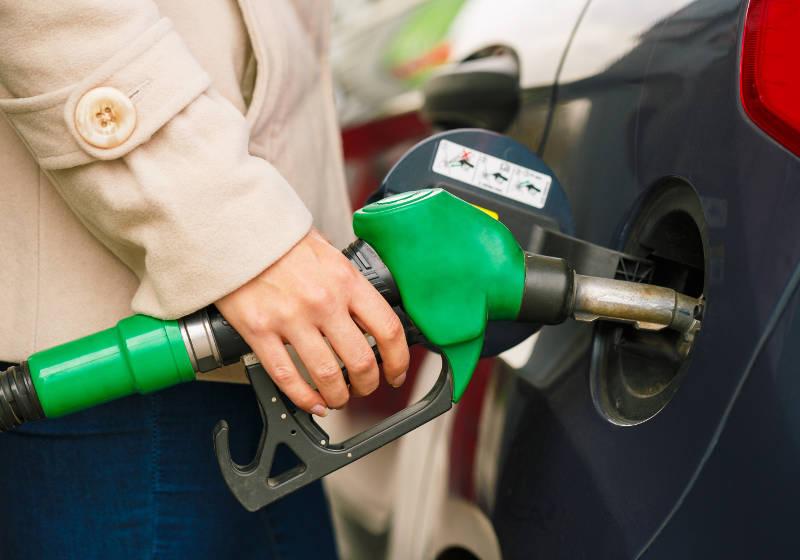
As E5 is now the standard for the super unleaded fuels, there are some benefits over using E10 petrol. Although E5 unleaded is more expensive per litre than E10 is, you will often get this price difference paid back.
You’ll see at the pump, super unleaded has a higher octane rating, E10 is 95 RON, whereas E5 is 97+ RON. What this means in reality is that the fuel delivers more power, while burning slower. Which in turn means it burns in combustion more efficiently. This, of course, translates to better MPG when compared to using E10.
Super unleaded fuels are also often portrayed as containing detergents to help clean your engine and make it more fuel efficient. These statements may, or may not be consistent across all petrol producers, and the amount of detergents actually added to the mix, could be very inconsistent.
But, the obvious benefit of using super unleaded E5 petrol, especially if you have an older vehicle that’s incompatible with E10 fuel, is that you’ll have fewer problems in the long run.
What problems does E10 cause?
We’ve already mentioned the hygroscopic and corrosive nature of ethanol and the potential problems it causes. We’ve spoken about achieving lower miles per gallon, poor running. But these are the two problems we see the most from our customers at our Lindford garage, Liphook Auto Services.
Catalyst Efficiency Below Threshold - P0420 Error Code
This problem occurs when E10 fuel is used and the engine tries to compensate for the less efficient (less dense) fuel in the combustion process.
As the exhaust gas passes over the lambda sensor, it detects something’s wrong and automatically adjusts the air-fuel ratio to compensate for it. It then re-measures the exhaust gas and adjusts again, over and over.
Eventually, when the engine management unit has made the maximum number of adjustments to maintain fuel consumption, it will give up and illuminate the EML warning lamp on the dashboard. It also registers the fault code P0420 in the ECU for the engine.
Random Multiple Misfire - P0300
E10 leaves deposits in the fuel injectors from degrading fuel system components and external carbon buildup on the nozzles of fuel injectors. We see this issue a lot.
Unlike other misfire problems that failing ignition coil packs can cause, or spark plugs that have lost their spark, the E10 issue is because of poor injector spray patterns.
The fault code recorded on the ECU is P0300. It’s triggered by fouled fuel injectors, not delivering an efficient fuel spray pattern. The resulting poor combustion process is detected by the ECU, which illuminates the EML on the dashboard.
These two frequent problems often occur even in newer vehicles that accordingly can ‘run’ on E10 unleaded. So, while they may run, they may not run very well.
At Liphook Auto Services in Lindford, we always use specialist fuel cleaning treatments during vehicle servicing to help keep on top of these problems. These fuel additives help to keep your fuel system clean, they neutralise the acidic effects of E10 fuel, and improve combustion. Which helps to restore fuel efficiency and improve your miles per gallon.
But, as a final note, if you’re looking for ethanol free fuel, at least at the moment, it’s available from ESSO. Where their website states:
Although our pumps have E5 labels on them, our Synergy Supreme+ 99 is actually ethanol free (except, due to technical supply reasons, in Devon, Cornwall, North Wales, North England and Scotland). Legislation requires us to place these E5 labels on pumps that dispense unleaded petrol with ‘up to 5% ethanol’, including those that contain no ethanol, which is why we display them on our Synergy Supreme+ 99 pumps.
Well, there you have it. That’s our round up of E10. Should you or shouldn’t you use E10? It’s the ten million dollar question. There are good reasons to use E10, but equally valid reasons to avoid it like the plague.
Main image credit: Flickr, Creative Commons licence.